
Glass Beads for Sandblasting – MIL Spec & AMS Glass Bead Media
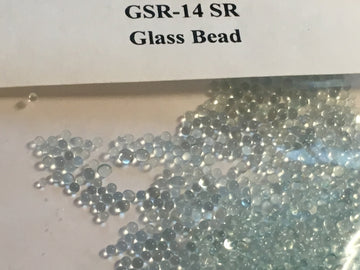
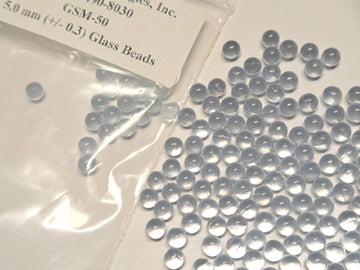
Our industrial glass beads for sandblasting are high-quality, hardened soda-lime glass bead media designed for cleaning, surface finishing, deburring, shot blasting and shot peening.
Available in a wide range of MIL and AMS sizes, these spherical glass bead blasting media produce a clean, uniform finish while removing oxidation, scale, residue and surface contamination without the aggressive cutting action of angular abrasives.
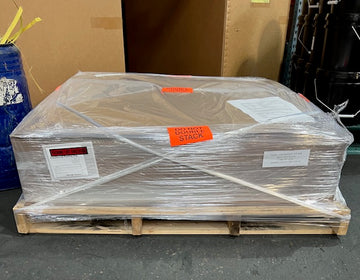
Choose from MIL-PRF-9954D glass beads or AMS glass beads, packaged in 50 lb units with bulk pallet quantities available.
Need commercial quantities? Request a freight quote for 500 lbs, 1,000 lbs or full-pallet orders.
Why Use Glass Beads for Sandblasting?
Glass bead media cleans and finishes a surface primarily by impact rather than aggressive cutting.
Because the beads are spherical, they can produce a smoother, more uniform finish than sharp angular abrasives while minimizing dimensional change to the underlying part.
Glass bead blasting is commonly used when you want to:
- Clean metal without aggressive material removal
- Produce a smooth, uniform satin or matte finish
- Remove oxidation, carbon deposits and surface contamination
- Blend minor surface marks and imperfections
- Deburr machined or cast parts
- Prepare surfaces for subsequent finishing or coating
- Peen metal components
- Clean aluminum, stainless steel, brass and other metals
- Finish complex shapes, dies, molds, gears and machine parts
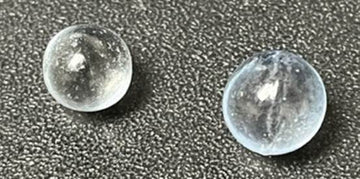
Our glass beads contain no free silica and are manufactured from hardened soda-lime glass.
Glass Bead Blasting for Aluminum
Glass beads are especially popular for blasting aluminum because their rounded shape provides a less aggressive cleaning action than many angular abrasives.
They can remove oxidation, residue and surface contamination while producing the clean, even appearance commonly associated with glass bead blasted aluminum.
Glass bead media is also used on:
- Aluminum castings
- Stainless steel
- Brass
- Die-cast components
- Machine parts
- Medical equipment
- Food-processing equipment
- Dies and molds
- Springs, gears and other metal components
For extremely delicate substrates where even glass bead media may be too aggressive, consider plastic blast media.
Glass Bead Media for Cleaning & Surface Finishing
Glass bead blasting can restore surfaces affected by carbon deposits, oxidation, heat scale and other contamination.
The spherical beads leave numerous small, rounded impressions rather than the sharper profile created by angular grit.
This makes glass beads particularly useful when appearance and surface uniformity are important.
Typical applications include:
- Metal cleaning
- Surface finishing
- Oxide removal
- Carbon removal
- Blending surface defects
- Deburring
- Pre-coating preparation
- Cosmetic finishing
- Mold and die cleaning
- Stainless steel finishing
Glass Beads for Shot Peening
Glass beads are also used as shot peening media when controlled spherical impact is required.
Peening creates compressive stress at the surface of a metal component and may be specified for components such as:
- Springs
- Gears
- Crankshafts
- Aerospace components
- Precision metal parts
- Components subject to repeated flexing or fatigue
For applications requiring certified shot-peening media, select the appropriate AMS specification rather than standard MIL-spec blasting media.
MIL Spec vs. AMS Glass Beads
We offer both MIL-PRF-9954D glass beads and AMS glass beads.
MIL-PRF-9954D Glass Beads
MIL-spec glass beads are widely used for general glass bead blasting, cleaning and surface finishing.
Available sizes run from coarse through very fine bead distributions.
AMS Glass Beads
AMS glass beads have tighter particle-size distributions and stricter roundness requirements and are commonly specified for aerospace or controlled shot-peening applications.
AMS beads are generally more expensive because of these tighter specifications.
Important: If certification is required, select the specification you actually need when ordering. MIL-spec material cannot be supplied afterward with an AMS certification simply because the two products use similar glass chemistry.
COAs are available for the corresponding material ordered.
Glass Bead Size Chart
Choosing the correct bead size affects cleaning speed, surface finish and the resulting appearance of the part.
As a general rule:
-
Larger glass beads create a more pronounced surface finish.
-
Medium glass bead sizes are commonly used for general-purpose blasting and cleaning.
-
Fine glass beads produce a finer, smoother finish and are useful for precision work.
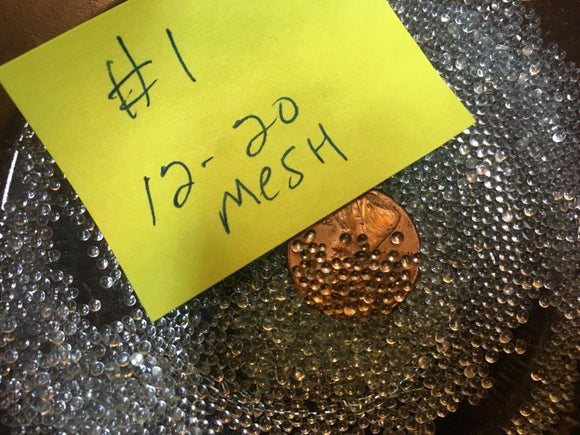
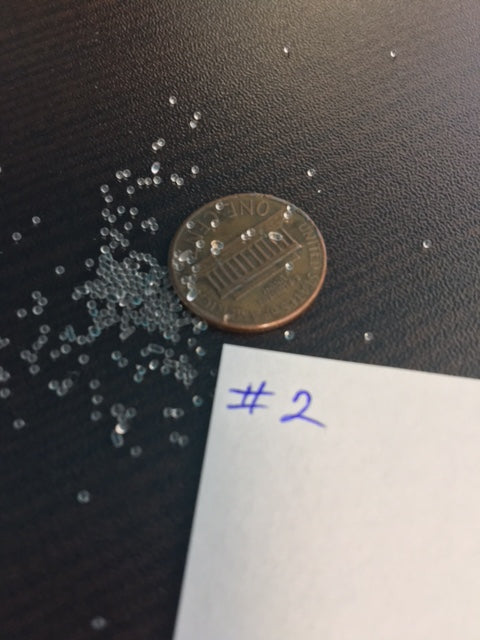
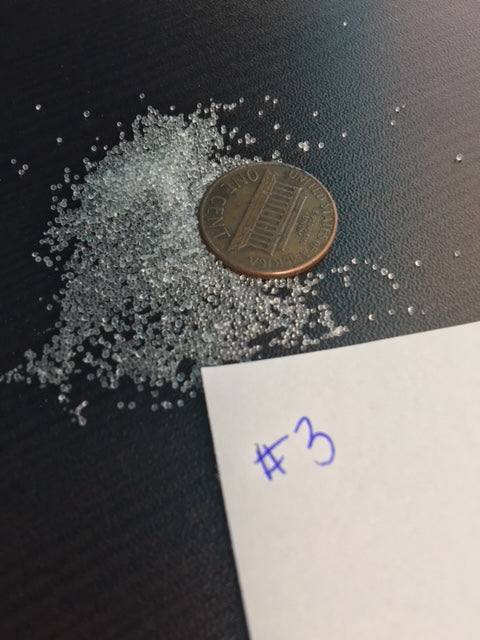
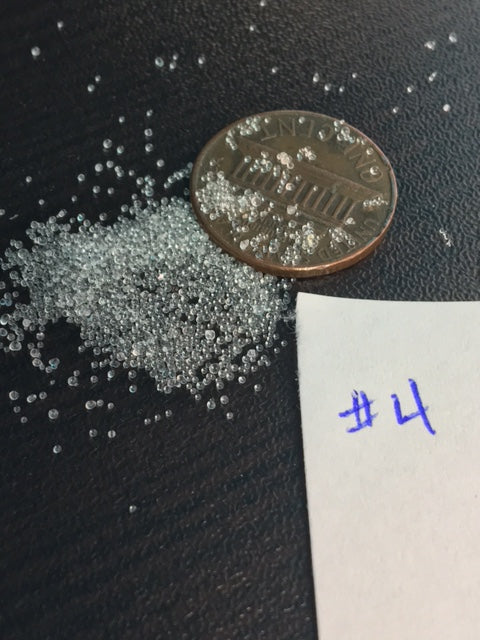
MIL-PRF-9954D Glass Bead Sizes
| MIL Size | US Sieve | Approx. Micron Range | Minimum % Round |
|---|---|---|---|
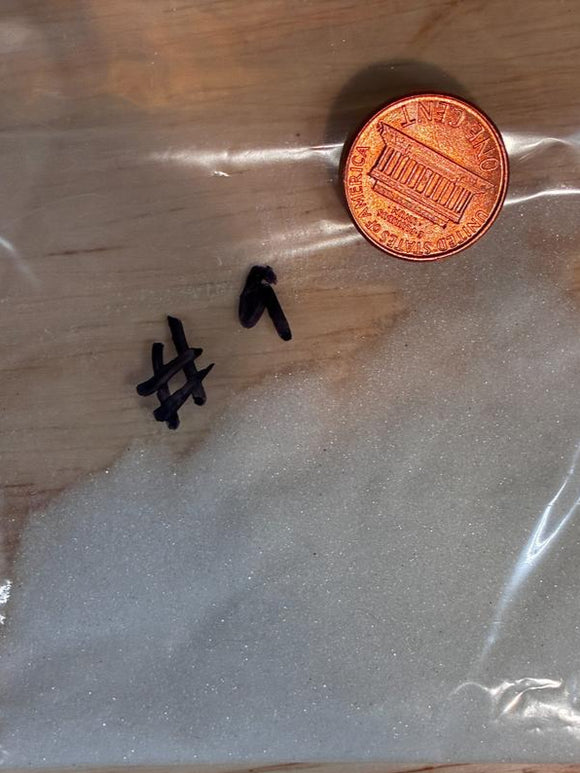
| #3 | 20–30 | 600–850 µm | 65% |
| #4 | 30–40 | 425–600 µm | 70% |
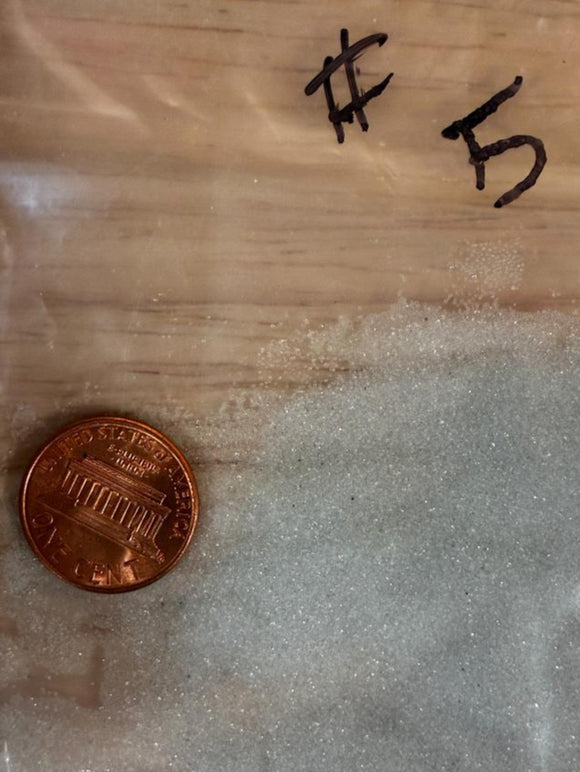
| #5 | 40–50 | 300–425 µm | 70% |
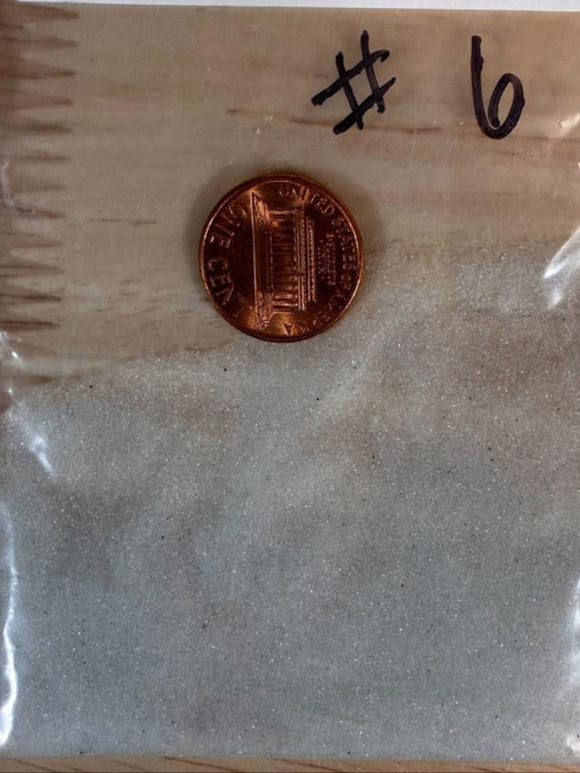
| #6 | 50–70 | 212–300 µm | 80% |
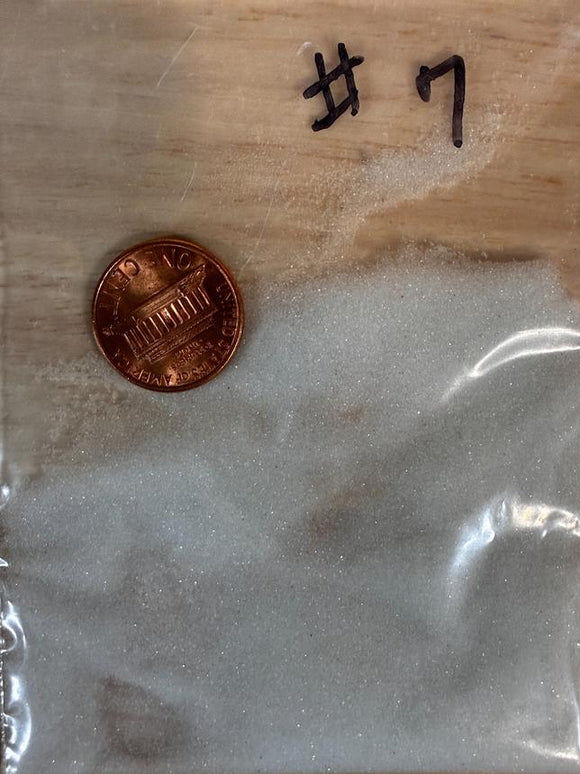
| #7 | 60–80 | 180–250 µm | 80% |
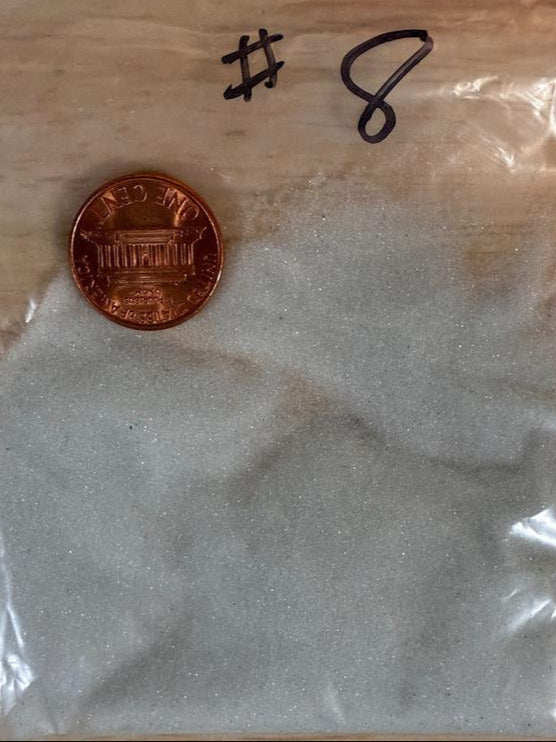
| #8 | 70–100 | 150–212 µm | 80% |
| #9 | 80–120 | 125–180 µm | 80% |
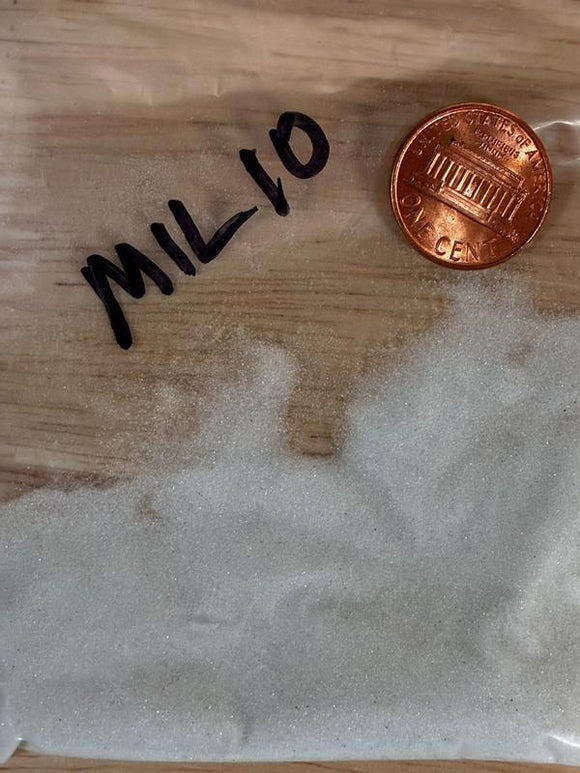
| #10 | 100–170 | 90–150 µm | 90% |
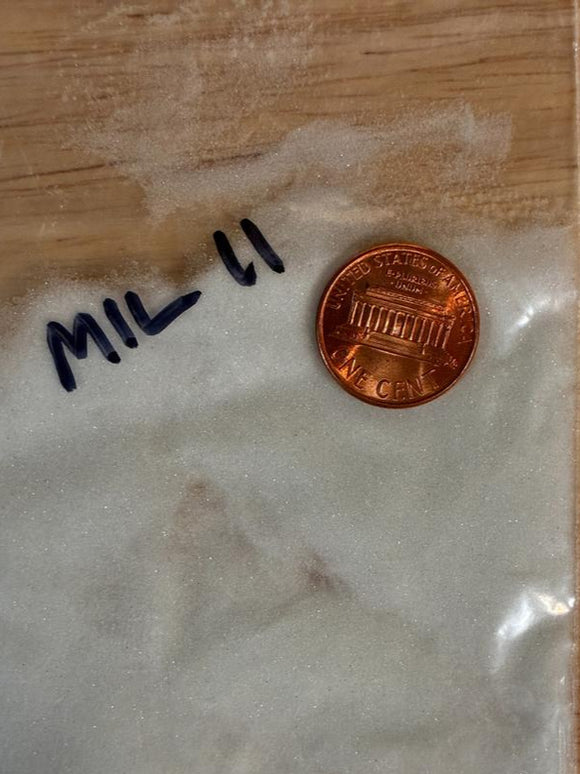
| #11 | 120–200 | 75–125 µm | 90% |
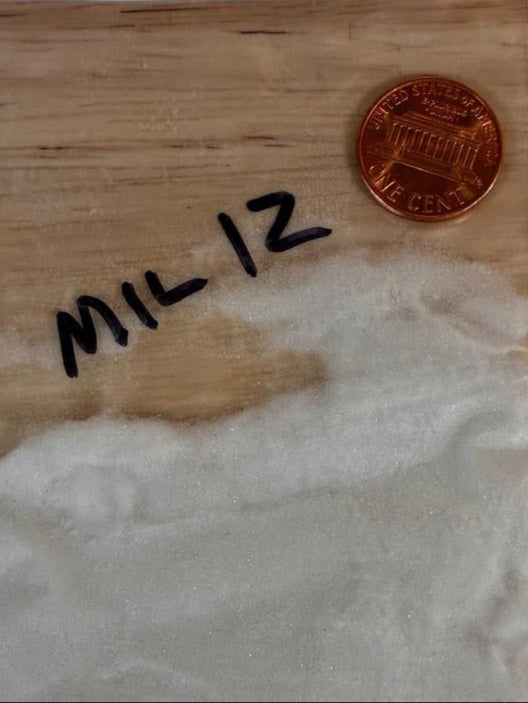
| #12 | 140–230 | 63–106 µm | 90% |
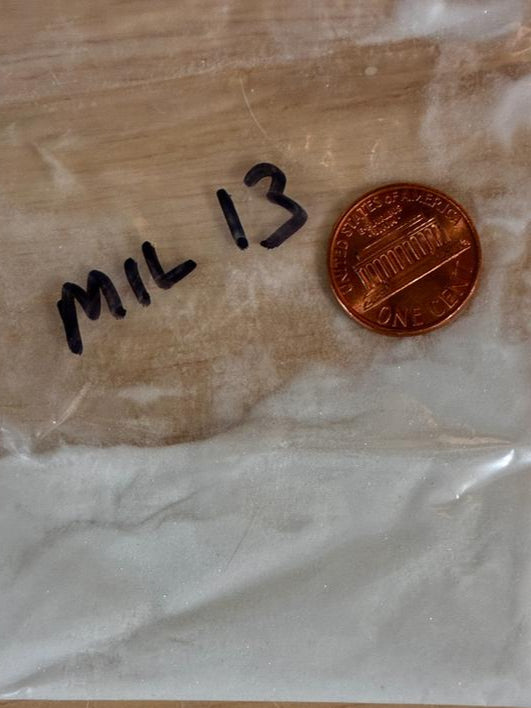
| #13 | 170–325 | 45–90 µm | 95% |
Not sure which glass bead size you need? Contact us with the material being blasted, desired finish, equipment type and current media size if known.
AGB / AMS to MIL Glass Bead Conversion
| AGB / AMS Size | Comparable MIL Size |
|---|---|
| AGB-150 | MIL-1 |
| AGB-100 | MIL-2 |
| AGB-70 | MIL-3 |
| AGB-50 | MIL-4 |
| AGB-35 | MIL-5 |
| AGB-25 | MIL-6 |
| AGB-20 | MIL-7 |
| AGB-18 | MIL-8 |
| AGB-15 | MIL-9 |
| AGB-12 | MIL-10 |
| AGB-10 | MIL-11 |
| AGB-9 | MIL-12 |
| AGB-6 | MIL-13 |
Glass Bead Technical Specifications
- Material: Hardened soda-lime glass
- Shape: Spherical
- Color: Clear / colorless
- Mohs hardness: approximately 5.5
- Knoop hardness: approximately 515
- Specific gravity: approximately 2.45–2.50 g/cm³
- Density: approximately 2.5 g/cc
- Lead-free: Yes
- Free silica: None
- Standard packaging: 50 lb units, 100lbs minimum order
- MIL specification available: MIL-PRF-9954D, AMS glass bead sizes available
- Suitable for wet or dry blasting
Additional applicable specifications include SAE AMS 2340 and AMS 2431/6 requirements where the corresponding material is ordered.
Common Glass Bead Applications
| Application | Why Glass Beads Are Used |
|---|---|
| Aluminum cleaning | Removes oxidation and contamination while producing an even finish |
| Stainless steel finishing | Creates a uniform cosmetic finish |
| Shot peening | Spherical impact provides controlled surface peening |
| Mold and die cleaning | Cleans complicated shapes with less aggressive cutting |
| Machine parts | Removes deposits and blends surface imperfections |
| Deburring | Removes light burrs and sharp edges |
| Food-processing equipment | Lead-free, clean glass media |
| Medical equipment | Controlled cleaning and finishing |
| Surface preparation | Cleans surfaces before subsequent finishing operations |
Glass Bead Blasting Equipment
These glass beads can be used in wet or dry blasting systems.
Equipment and pressure should always be matched to the bead size, part geometry and desired finish. Excessive blasting pressure can increase bead breakdown and change the resulting surface finish.
Packaging & Bulk Orders
Standard packaging is 50 lb units.
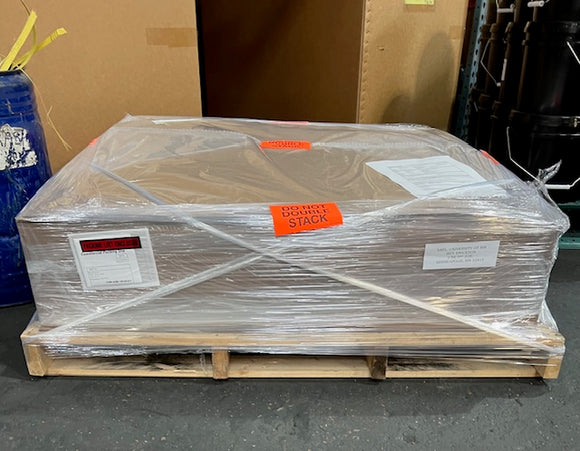
For industrial customers, glass bead media can also be supplied in bulk pallet quantities. A standard full pallet is approximately 2,000 lbs.
Whether you need a few boxes for a shop or recurring truck-freight quantities for production, we can quote the appropriate shipping option.