



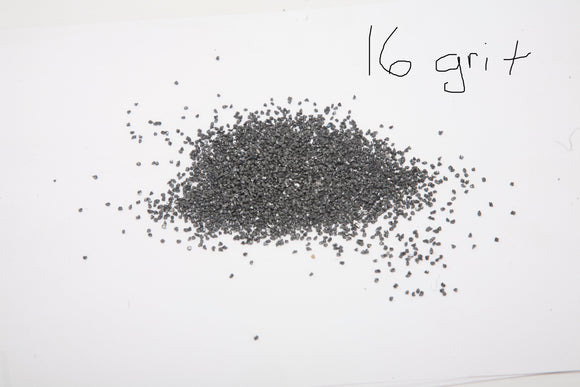


Black Silicon Carbide Abrasive Grit – Industrial SiC for Blasting, Grinding, Lapping, Glass Etching & Rock Tumbling
Premium Black Silicon Carbide (SiC) Abrasive Grain | FEPA-F Grits 8–240 | 50 lb Class Packaging | Industrial & Hobbyist Applications
High-Hardness, Fast-Cutting Abrasive for Precision and Heavy-Duty Applications
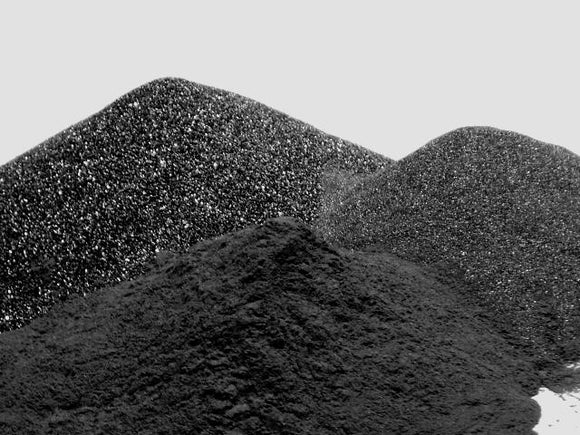
Our Black Silicon Carbide (SiC) abrasive grit is an exceptionally hard, sharp, angular synthetic abrasive engineered for aggressive material removal, controlled surface finishing, and precision grinding applications.
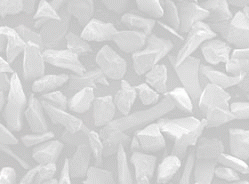
With a hardness of approximately 9.1 on the Mohs scale, black silicon carbide is harder than conventional aluminum oxide abrasives. Its crystalline structure creates sharp cutting edges that can fracture during use, exposing fresh cutting surfaces.
Whether you are an engineer specifying abrasive grain for a manufacturing process, a professional glass etching company, a ceramics manufacturer, or a rock tumbling enthusiast, our extensive selection of black SiC grit sizes allows you to choose the abrasive best suited to your application.
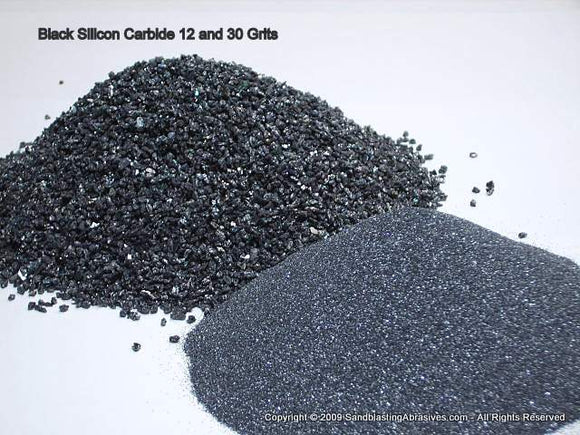
Available in FEPA-F grit sizes 8 through 240, including popular blended grades. Additional fine powders and specialty particle size distributions may be available by quotation.
Why Choose Black Silicon Carbide?
- Exceptional Hardness: Approximately 9.1 Mohs hardness for grinding and shaping hard materials, including glass, stone, ceramics, and selected metals.
- Sharp, Angular Grain: Aggressive cutting edges promote efficient stock removal and surface texturing.
- Friable, Self-Sharpening Behavior: Controlled grain fracture creates fresh cutting edges during use.
- Excellent Wear Resistance: Well suited to abrasive, wear-resistant, and high-performance material applications.
- Thermal and Chemical Stability: Desirable properties for selected refractory and advanced ceramic manufacturing processes.
- Extensive Grit Selection: Coarse, medium, fine, and blended particle sizes available for different surface finishes and material removal requirements.
- Industrial and Small-Business Supply: Suitable for manufacturers, machine shops, fabrication businesses, contractors, and dedicated hobbyists.
Top 10 Applications for Black Silicon Carbide Abrasive Grit
1. Abrasive Blasting, Surface Preparation & Industrial Cleaning
Black silicon carbide is among the hardest conventional abrasive blasting media available, making it a strong candidate for applications requiring rapid cutting, aggressive surface texturing, or processing of hard, brittle substrates.
- Glass and ceramic surface etching
- Stone carving and engraving
- Surface profiling before specialty coatings
- Removing selected hard coatings and residues
- Precision blasting of engineered components
- Texturing hard surfaces before bonding
Its angular grain can produce a pronounced etched surface. Finish characteristics depend on abrasive size, substrate, equipment, and processing parameters.
2. Rock Tumbling, Lapidary Grinding & Gemstone Processing
Black silicon carbide is a popular choice among professional lapidary shops, gemstone processors, rock collectors, and home rock tumbling enthusiasts.
Its hardness and cutting action make it particularly useful for the early grinding and smoothing stages of rock tumbling.
Popular rock tumbling grit selections:
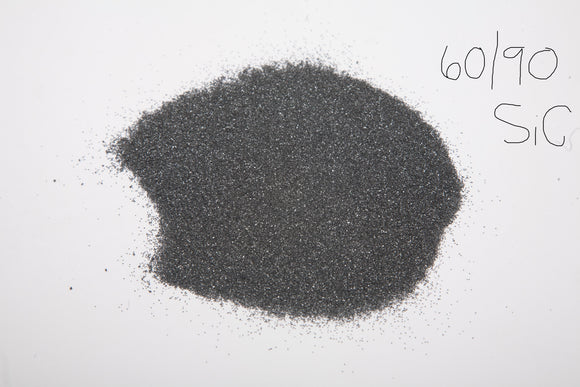
- 60/90 grit: Coarse grinding and initial rock shaping
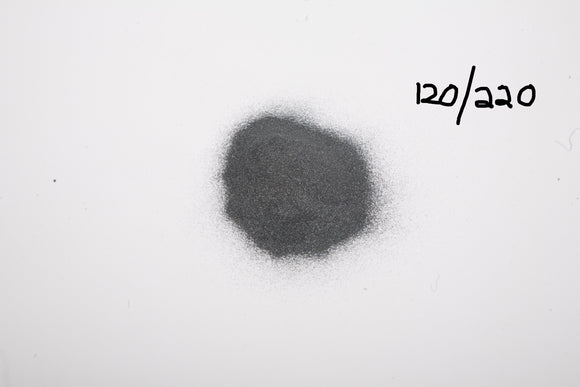
- 120/220 grit: Medium grinding and further surface smoothing
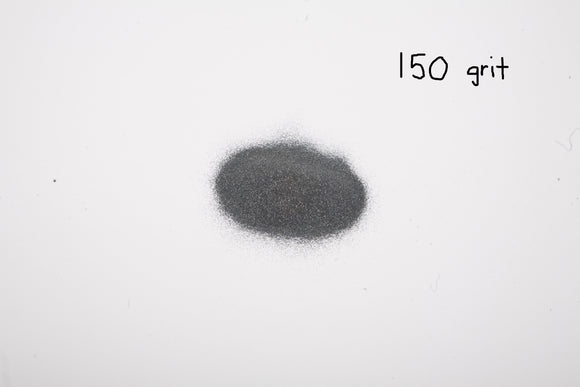
- 150–220 grit: Finer grinding and surface refinement
- Fine SiC powders: Selected pre-polishing and lapidary finishing operations
Black silicon carbide is suitable for processing many commonly tumbled rocks, including agate, jasper, quartz-based stones, and petrified wood.
For lapidary professionals, it also serves as a loose abrasive for stone grinding, flat lap equipment, and specialty cutting applications.
Note: The final high-gloss polish is generally produced using a separate polishing compound rather than coarse silicon carbide abrasive.
3. Precision Lapping, Flat Grinding & Mechanical Component Finishing
Black silicon carbide is widely used as a loose abrasive in lapping and precision grinding processes where surface geometry, material removal, and finish requirements must be controlled.
Typical applications include:
- Mechanical seal face lapping
- Valve and valve seat lapping
- Piston ring and engine component finishing
- Gear and precision-machined component lapping
- Flatness correction of hard surfaces
- Ceramic and glass component grinding
- Preparation of parts for finer polishing operations
Fine and carefully classified SiC abrasive grains are particularly useful when a repeatable abrasive size distribution is important to the process.
For critical tolerance applications, consult us regarding particle size requirements and available technical specifications.
4. Glass Etching, Bottle Engraving, Frosting & Optical Processing
Black silicon carbide is an excellent abrasive for professional glass etching, decorative bottle engraving, glass frosting, and precision glass grinding. Its exceptional hardness and sharp, angular particles make it particularly effective for creating detailed designs, textured surfaces, and frosted finishes on glass.
Common commercial and industrial applications include:
- Wine bottle etching and engraving – Custom wine bottles, personalized gifts, winery branding, and corporate presentations.
- Liquor and spirits bottle etching – Decorative engraving of whiskey, bourbon, vodka, and specialty spirits bottles.
- Beer bottle etching – Brewery logos, decorative designs, and promotional glass packaging.
- Custom glass bottle sandblasting – Logos, lettering, artwork, and intricate designs on glass containers.
- Glass frosting and privacy glass – Decorative glass panels, architectural glass, and frosted finishes.
- Glass signage and lettering – Commercial signage, awards, personalized glass gifts, and etched promotional products.
- Decorative glassware engraving – Drinking glasses, vases, ornaments, and specialty glass products.
- Glass edge grinding and surface preparation – Controlled material removal and refinement of glass components.
- Quartz and optical glass processing – Precision grinding and lapping before final polishing.
For commercial bottle etching businesses, black silicon carbide provides aggressive cutting action for engraving logos, text, and decorative patterns on glass bottles. Abrasive particle size, blasting pressure, stencil quality, and exposure time influence engraving depth, detail, and surface finish.
Whether producing custom-etched wine bottles, branded spirit bottles, or intricate decorative glass designs, black silicon carbide offers a versatile abrasive option for professional glass decorators and specialty engraving shops.
5. Grinding Wheels, Sharpening Stones & Bonded Abrasive Manufacturing
Black silicon carbide is an established raw material used in manufacturing bonded abrasive products.
- Vitrified grinding wheels
- Resin-bonded grinding wheels
- Sharpening stones
- Abrasive grinding segments
- Specialty grinding tools
- Honing stones
- Abrasive wheels for cast iron and nonferrous materials
Its sharp, hard crystalline structure provides cutting performance for difficult-to-grind, hard, or brittle materials. Our online selection consists of FEPA-F graded abrasive grain, a classification widely used in bonded abrasive manufacturing.
6. Coated Abrasives, Sandpaper, Abrasive Belts & Discs
Silicon carbide grain is also used by manufacturers of coated abrasives, including:
- Waterproof abrasive paper
- Wet/dry sandpaper
- Abrasive sanding belts
- Specialty sanding discs
- Abrasive sheets
- Precision finishing products
Silicon carbide's hardness makes it especially useful for sanding glass, stone, ceramics, plastics, and selected nonferrous materials.
Important for abrasive manufacturers: FEPA-F and FEPA-P designate different particle sizing systems. Our online product selections are FEPA-F grades. Contact us regarding FEPA-P coated abrasive grain requirements and availability.
7. Advanced Ceramics & High-Tech Ceramic Manufacturing
Silicon carbide is an important engineered ceramic material because of its outstanding hardness, wear resistance, thermal conductivity, and high-temperature performance.
Depending on chemical purity, particle size, and manufacturing specifications, black SiC grain and powders may be incorporated into ceramic production or used in grinding and finishing technical ceramic components.
Relevant markets include:
- Advanced structural ceramics
- Wear-resistant ceramic components
- Mechanical seals and bearings
- Ceramic processing equipment
- Engineered ceramic substrates
- Precision ceramic grinding
- High-temperature ceramic components
- Industrial wear parts
For technical ceramic manufacturing, chemical composition, impurities, particle size distribution, and processing requirements must be evaluated before selecting a particular SiC grade.
Abrasive-grade black silicon carbide should not automatically be assumed to meet semiconductor, electronic, or high-purity sintering specifications.
8. Refractory Materials, Furnace Linings & High-Temperature Ceramics
Silicon carbide is used in selected refractory formulations because of its thermal properties, hardness, and resistance to wear and certain corrosive environments.
Industrial refractory applications include:
- Refractory castables
- Furnace linings
- Incinerator components
- Kiln furniture
- Firebrick formulations
- Refractory mortars
- High-temperature wear-resistant parts
- Specialty thermal-processing equipment
Particle size distribution and chemical requirements vary considerably depending on the refractory formulation.
Manufacturers requiring refractory-specific grains, aggregate sizes, or fine powders should contact us for grade selection and quotation.
9. Anti-Slip Concrete, Industrial Flooring & Traction Aggregate
Black silicon carbide is an excellent candidate for durable, wear-resistant, anti-slip surfaces where hard, angular particles are incorporated into a properly designed flooring or concrete system.
- Industrial and commercial floors
- Concrete sidewalks
- Pedestrian plazas
- High-traffic walkways
- Ramps and stairways
- Abrasion-resistant floor coatings
- Specialty safety surfaces
Featured Grade: Black Silicon Carbide 16/35 Mesh
Our 16/35 blended grade is especially relevant for contractors and specifiers seeking coarse, wear-resistant aggregate for selected concrete and traction applications.
New York City sidewalk specifications have referenced silicon carbide in nearby grit size ranges, including 16/30 and 16/36 mesh, for certain pedestrian concrete applications.
10. Metalworking, Foundry Finishing & Nonferrous Material Grinding
Black silicon carbide is used in selected industrial metalworking operations requiring sharp abrasive cutting action.
- Grinding cast iron components
- Finishing aluminum and other nonferrous metals
- Precision mechanical lapping
- Deburring selected manufactured components
- Foundry component finishing
- Surface refinement before subsequent finishing operations
- Grinding hard or brittle metal-containing materials
Compared with some aluminum oxide abrasives, silicon carbide can provide more aggressive cutting on certain substrates. The best abrasive depends on the material, desired finish, processing equipment, and economics of the operation.
Black Silicon Carbide Grit Selection Guide
Choose the abrasive size according to your substrate, required finish, and processing method.
| Grit Size | General Application Guidance |
|---|---|
| 8–24 | Very coarse grinding, aggressive stock removal, selected traction aggregate applications |
| 30–54 | Coarse grinding, surface texturing, industrial abrasive processing |
| 60–90 | Rock tumbling, stone shaping, glass etching, general abrasive finishing |
| 100–150 | Medium/fine grinding, surface refinement, selected lapping applications |
| 180–240 | Fine grinding, glass finishing, ceramic processing, selected pre-polishing |
| Blended sizes | Rock tumbling, specialty grinding, flooring applications, and custom process requirements |
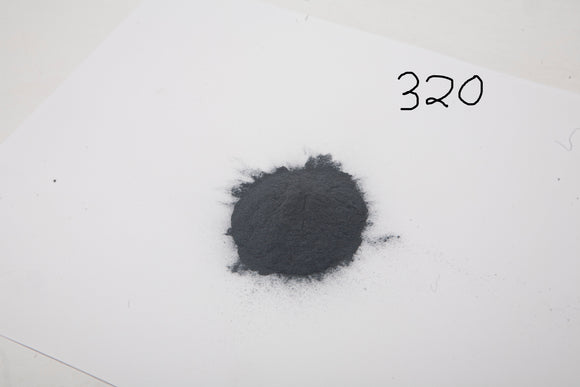
Available blended sizes include 16/35, 30/60, 46/70, 60/90, 120/220, and 150/220.
These are general selection guidelines, not guaranteed finish specifications. Actual results depend on the material being processed and the process conditions.
Black Silicon Carbide Technical Properties
| Property | Typical Characteristic |
|---|---|
| Chemical designation | SiC |
| Material | Synthetic black silicon carbide |
| Abrasive hardness | Approximately 9.1 Mohs |
| Particle shape | Angular, sharp-edged crystalline grain |
| Abrasive behavior | Friable, with formation of fresh cutting edges during fracture |
| Material density | Approximately 3.2 g/cm³ |
| Thermal characteristics | High thermal conductivity and relatively low thermal expansion |
| Chemical properties | Good chemical resistance in many industrial environments |
| Online grit classification | FEPA-F |
| Online grit selection | 8 through 240, plus selected blended sizes |
| Packaging | Approximately 50 lb class units; confirm selected SKU |
Values shown are representative of black silicon carbide as a material and do not constitute lot-specific certified product specifications.
Black Silicon Carbide vs. Aluminum Oxide: Which Should You Choose?
Both are excellent industrial abrasives, but their material properties and cutting characteristics differ.
| Characteristic | Black Silicon Carbide | Aluminum Oxide |
|---|---|---|
| Relative hardness | Higher | Lower |
| Grain behavior | Sharp, relatively friable | Generally tougher |
| Cutting action | Aggressive on many hard or brittle materials | Versatile general-purpose abrasive |
| Glass and stone grinding | Excellent candidate | Application-dependent |
| Rock tumbling | Popular for grinding stages | Also used in finishing processes |
| General steel blasting | Application-specific | Frequently preferred |
| Precision lapping | Widely used | Widely used |
Choose black silicon carbide when hardness, sharp cutting edges, and performance on glass, stone, ceramics, and other difficult substrates are priorities.
Consider aluminum oxide where greater grain toughness and resistance to impact fracture are more important.
Frequently Asked Questions
Is black silicon carbide suitable for a home rock tumbler?
Yes. Black silicon carbide is widely used for coarse and medium rock tumbling stages. Select a grit size appropriate for your tumbler, stone type, and stage of processing.
Can black silicon carbide be used for glass etching?
Yes. Its hardness and angular grain make it useful in professional glass etching, frosting, and engraving applications. The grade selected influences the resulting texture.
Is silicon carbide harder than aluminum oxide?
Yes. Silicon carbide typically measures approximately 9–9.5 on the Mohs hardness scale, compared with approximately 9 for aluminum oxide. Actual abrasive performance also depends on grain toughness and application conditions.
What is the difference between FEPA-F and FEPA-P abrasive grit?
FEPA-F designations are used primarily for bonded abrasive grain, while FEPA-P designations are used for coated abrasives. They represent different grading systems and are not automatically interchangeable.
Can black silicon carbide be used to manufacture technical ceramics?
Yes. Silicon carbide is an important raw material for engineered ceramic products. However, ceramic manufacturers must verify the required chemical purity, particle size distribution, and suitability for their forming and sintering processes.
Is black silicon carbide a polishing abrasive?
It is primarily a grinding and lapping abrasive. Fine SiC powders can be used for surface refinement and pre-polishing, although final mirror finishes often require another polishing compound.
Do you offer bulk quantities or specialty grades?
Contact Sandblastingabrasives.com for larger-volume quotations, specialty particle size requirements, and availability of additional grades.
Order Black Silicon Carbide Abrasive Grit Online
From the hobbyist polishing a collection of agates to the engineer sourcing abrasive grain for a precision manufacturing process, Sandblastingabrasives.com supplies black silicon carbide in a broad selection of industrial grit sizes.
Choose your preferred grade from the product options above, or request a quotation for larger quantities and specialty requirements.
Industrial Buyers: Contact us with your desired grit classification, quantity, required particle size distribution, and application. We ship in 2000 lb supersacks, 300 lbs drums, or 50lb bags/boxes/pails upon request.
Small Businesses and Hobbyists: Our online ordering options make professional abrasive grain accessible without requiring full-pallet purchases.
Freight Options: Commercial and terminal-delivery options may help reduce freight costs, particularly for larger shipments.